Showing posts with label food. Show all posts

13 April 2016

Adulthood, one bowl of pasta at a time

While making spaghetti sauce this evening (Bolognese-ish style), I suddenly found myself remembering one of those days when it had hit me that I was turning into an adult. I don't ever feel entirely like an adult, but I have moments where I have the sudden realization that I am not a child. Oh, I know that, all the time, and go about my day, but it's the sort of knowledge that resides in the back of my mind.

The day I remembered was an afternoon in late autumn when I was in my third year of undergrad. I was hanging out and doing homework in the common area of my boyfriend's dorm. At that time, he lived in a dorm with a big shared kitchen, and it was always fun to camp out and watch the guys he lived with figuring out how to cook edible food. While it wasn't a new skill for many of them, some of them got more than a little creative in their efforts. We kept wondering if the guy who literally lived on meat and potatoes, no salt, would develop a vitamin deficiency. J.'s roommate seemed to mostly subsist on instant kimchi noodles. And J. himself was a big fan of orange juice smoothies. Made mostly with a can of orange juice concentrate and very little else.

Anyway, that day, J. was still in class and I was doing homework, and one of our mutual friends was making spaghetti. He could definitely cook, and cook well, but he preferred non-Western food. This was his first time making a spaghetti (Bolognese) sauce. He called me over to taste it. He felt like something was missing but didn't know what. "Needs more oregano," I said, almost without thought, after tasting the sauce. So he added more oregano and went on with his dinner preparation.

I remember the moment because I then noticed I had become someone who could figure out what a sauce was missing, a skill I had mostly attributed to adults. And all of sudden, I was one of them.

My current version of spaghetti, which includes carrots, cheese, and pork.
Adulthood, in my experience, is something that comes in small experiences which add up to a large whole. It doesn't happen instantly, overnight. It's a process. It doesn't mean I have to act like the token grownup 24/7, but it does mean that those responsibilities of adulthood, of being the grownup, become more familiar every day. Sometimes it means that I floss my teeth every day, whether I want to or not, as an example to my daughter and to avoid massive dental bills in the future, and sometimes I means I can tell when a sauce needs another spoonful of oregano.

07 October 2015

I mostly keep starting posts and then not finishing them lately, which is why I haven't been blogging. The brain, it doesn't always concentrate the way I want it to. Some of that is the process of trial and error involved in finding the right combination of anti-depressant/anti-anxiety meds, and some of that is just me being scatterbrained (I doubt I'm officially ADD, but there are some tendencies. Plus, I live with a man who actually does have ADD, so I'm sure some of that just gets absorbed due to living together).

So, updates: Ley Lines is still in progress. It looks like my cover artist won't be done with the new cover by my initial planned release date, but the bonus of doing this myself (and of having such a minimal following at this point) is that I can reschedule things without a hassle. So we're bumping Ley Lines to a November 30, 2015 release date, contingent on my cover artist getting the cover completed and me getting my act together and finishing stuff. Which means, of course, that I won't even be attempting NaNoWriMo this year (it's a fun idea, though, so I'm going to give it a go another time).

I haven't been blogging in part because I have been feeling unmotivated about writing for no specific reason, and I've been reading a lot more than I've been writing. The reading is good, don't get me wrong, but it does distract from the writing. Add a sometimes grouchy and always bouncy two-year-old, the aforementioned anxiety and depression, the migraines that have been showing up lately, the attempt to knit more socks to replace the ones that are falling apart, and my recent interest in Criminal Minds, and you have a world-class set of distractions. (I mean, Spencer Reid and Penelope Garcia? So distracting. I've been forced to wait for Season 2 to show up on the hold shelf at the library for me, and now I get to go pick it up tomorrow. But I will make myself do some writing before I'm allowed to watch "Fisher King, Part 2" and find out what happens).

This weekend is Thanksgiving, and as we have the largest space and the most place settings, we're hosting again. Cooking a turkey grows less frightening every year. So, on Saturday, my sisters-in-law and their partners and my mother-in-law and possibly my aunt-in-law are descending on us. I've committed to doing the pie and the cranberry sauce, J. is doing the potatoes, and we're doing the turkey together. (Wait, that looks dirtier than I thought it would...). The others are bringing assorted vegetable and side dishes and booze. And I have to make sure to have some kid juice for E. so she won't get too grumpy about not being allowed to share.

My anxieties about E.'s language development are slowly disappearing, as it seems like she adds new words all the time, and is putting them together more frequently. Her first sentence using the first person pronoun was "I poop." It's hard to express just how excited I was about that. Now I mostly get to worry about the way she climbs things. The other day, we were in the kid's section at the library, and I was reading a book. Suddenly one of the librarians calls, "Ma'am, that's dangerous!" I turn to see E. dancing on top of a table. I wasn't terribly worried, since it wasn't a high table and she does this all the time, but rules are rules, especially at the library. If there's one place I never want to get banned from, it 's the library.

So, time for me to go make a grocery list and think about getting the chutney started tomorrow. At least chutney's an easy one to make. And I have a sock toe to finish tonight, and edits to incorporate into a short story so I can actually send it out again. Time to try being productive!

11 June 2015

making: a shawl, yarn, and jam

Today's post is going to be more cheerful than the last one. Yes, I'm doing better, and have taken constructive steps so I don't implode. Also, I've gotten a short story rejected from two different magazines, and am setting up to take another run at sending it in to another magazine. The rejections didn't crush me (unlike my first book rejection a few years ago did - man, I did not react well to that!); they were pretty much expected. At some point, hopefully, I'll get an acceptance and it'll be a lovely surprise. In the meantime, story rejections aren't exactly personal. I've been going through my other short stories and, unfortunately, classifying most of them as "rubbish," "really bizarre and pointless," "from my way-too-religious high school phase," or "my brief foray into trying to make romance writing work." I don't think I'll give up on that last category, but the take-away has been that I need to write more and better short stories, along with working on Ley Lines.

In the part of my life where I make things, I finished a shawl for a friend and sent it off to her. It turned out beautifully, as you can see below.

Dragon Wings shawl
The shawl pattern is Dragon Wing, by the designer Patti Waters. It's available on Knitty.com. I knit it out of Handmaiden Seasilk, which is awesome, awesome yarn. The colourway is "Glacier," if you're interested. I got it secondhand from someone who was selling off part of her stash, so I got it for half-price. This is expensive stuff, and I've been hoarding my two skeins for a while until I could figure out what to make with them. This left me with about 70% of a skein, enough for a pair of mitts. I love the yarn, though my colour preferences usually lean a bit more vivid. Next time I buy some Handmaiden, I'm definitely picking one of their other colourways. The last skein I had of one of their other yarns was in "Nova Scotia," which is blue and green. It was gorgeous and I still love the mitts I made with it, but I'm really attracted to warmer colours, like purples and reds and browns lately. And Handmaiden has some amazing warm-toned colourways. (No, I don't get paid by them or anything like that; I just happen to live in the same country so their yarns turn up at a lot of local shops and they're pretty).

Silk hankies/mawata dyed with food colouring
I started (and finished!) a spinning project. It's been a while since I've done any spinning, so it's been nice to pull out the wheel and see how out-of-practice I am. I had some silk hankies (mawata) in my fiber stash, which I had dyed with food colouring (see above picture). I spent a couple afternoons working through the hankies, spinning singles. Silk hankies are hard on the hands, since you have to stretch them to prep the fiber. Silk's tough enough that I've actually developed blisters on a couple fingers.

The singles were a little inconsistent; some of that has to do with my lack of practice, but some of it was related to the material. Silk hankies aren't like working with combed top or roving, and silk doesn't adjust as easily while spinning as other animal fibers do. So there are some super-thin bits, and some puffy bits. When I plied the singles together, I ended up with a yarn that runs a little thick-and-thin, from light-fingering to DK/worsted, averaging out to a DK weight through most of the skein.

2-ply silk yarn
The final skein weighed about 45 grams (the last 5 grams are still on the bobbin; I ran out of yardage on the second bobbin and stopped there; it'll be chain-plied later so I can practice that technique), and, measuring with my 1.5 meter niddy-noddy, I ended up with about 155 meters. It's enough to actually do something with. I think it'll probably be a hat.

I've also managed to make time to do a little bit of canning. We do have a ridiculous number of jars of jam to work through over the summer, but it's also that time of year. I'm working my way through the recipes in Preserving by the Pint that pique my interest. Marisa McClellan's most recently released book is a lovely little gem of a cookbook that focuses on extra-small batch preserves. Rather than making half a dozen pints of jam, the recipes usually make a couple pints at most. The recipes I made yesterday gave me two 250-ml jars each.

  
Two jars of jam; two jars of strawberries
I made a batch of Whole Strawberries in Vanilla Syrup, because I had strawberries in the fridge that were starting to go. I had to cut some in half because these were bigger ones, unlike the small ones recommended in the recipe. The stuff tastes amazing, and I had a ridiculous amount of syrup left over. There's a 500-ml jar in the fridge that is mostly full of strawberry-vanilla syrup and will be going on pancakes.

The other jam I made was the Apricot Rosemary jam. Apricots are in at the produce store right now, so I grabbed a few (several more than I needed, so more apricots, enough for a different recipe, are on the grocery list) and some rosemary, and whipped these up pretty quickly. It smells fantastic and the taste is pretty unique. I think it'll go well on some kind of meat or with cheese. I got two 250-ml jars out of it. I'm out of empty 125-ml jars, so the last of it went into a container in the fridge.

I'm off to the farmer's market this afternoon, and I plan to pick up some local strawberries there. I want to do a batch of strawberry jam and another round of the strawberries in syrup. I think we may need a trip to the store to stock up on sugar, since we're almost out.

14 February 2015

Fermentation

If you're into canning, you'll probably run across the term "lacto-fermentation" at some point, particularly if you read a lot on the subject. I read a bit about the fermenting foods thing, then said, rather determinedly, to J., that I was not interested in trying that.

Two weeks later I was making salt-preserved Key limes.

A couple months later, right after getting home from Christmas with my new canning book in tow, I was chopping cabbage for sauerkraut.

Then I tried homemade ginger beer. Followed by a second batch. Now we're on batch three of the ginger beer, and batch one of a strawberry soda, both mixed up this evening and popped into a cupboard to mature and develop fizz for a couple of days.

What we're discovering with homemade soda is that we like the not-too-sweet taste of it. And once I figure out what I'm doing with it, I can experiment and make bubbly drinks that we can't find elsewhere. I have a number of ingredients to track down before I can make homemade root beer (and one glance at the ingredients list for "root beer extract" convinced me that it would be worth the extra effort to actually use roots to make the concentrate), but I think if the strawberry soda works out, lime soda is next on the list.

What about the alcohol content? Well, there's not much. Enough to make it fizzy, but not enough to even notice that zing that most alcoholic drinks have.* Right now I'm using instant yeast to start the fermenting process, which is easy and reliable. A lot of recipes out there use whey or one of those clumps of bacteria known as bugs (not unlike what's used in kombucha). I often have an absurd amount of whey leftover from making yogurt, so I will probably try using whey for fermenting soda at some point.

It's actually more fun and less exacting than I thought it would be, and I like the results. The next big fermenting project will probably be lacto-fermented dill pickles. Like sauerkraut, that's a longer commitment than soda, and it requires more frequent checking than soda does, too. We'll see how it goes.

*A note: As we don't have the equipment to test the alcohol content of the homemade sodas, but we do know there is at least a little there, we don't share the stuff with our toddler. Better safe than sorry.

26 August 2014

Jamming

I've missed out making jam for the last couple summers. I'd do a batch here and there, but I hadn't been very serious about planning it out so we'd have jam all winter. Last summer I was too pregnant, and then too involved with a newborn, so this summer, I'm making up for it. This requires J. to watch the tiny one, since she has a habit of wandering into the kitchen and demanding to know what I'm doing and to see what's on the stove at the most inopportune moments. Now that we have a Learning Tower (no, I am not affiliated with them, nor do I earn money from this link, I just think it's a cool and useful piece of furniture), I'm hoping that this will be less of a problem, but you never know. 

One of the things that's kick-started this interest in canning is the book Food in Jars by Marisa McClellan. My mum gave me a copy when we moved, and I've already worked through a few recipes. The book is a lovely piece of work; it focuses on small batch canning and offers recipes for interesting but not too exotic jams, jellies, preserves, and sauces, as well as some pickling recipes and a few foods that can go in jars but which aren't canned. I plan to try many of the jam recipes and a few of the pickles. The canned tomatoes and tomato sauce are also on my list.

Image from foodinjars.com
Small batch canning interests me partly because I don't like turning an entire flat of apricots into jam--it's very time-consuming and it leaves us with nothing but apricot jam for the winter. I prefer to do several small batches of different kinds of jam.

Thus far, from this book, I have tried the strawberry vanilla jam, the apricot jam, the peach plum ginger jam, the nectarine lime jam, and the blueberry jam. The cantelope and spiced plum jams are also on the list. Pickled asparagus is on the list for later this week, since asparagus was on sale at the produce store (our new home is three blocks from a great produce store--we're already eating more vegetables just because I like going there).

The thing that has revolutionized my canning is the use of a stockpot instead of a canning pot for canning in. It's deep enough, big enough for about half a dozen jars at a time, does not rust after a season or two like the enamel-ware, and is not a uni-tasker. This is one of those brilliant ideas that had never occurred to me before, but is mentioned in McClellan's book as a great option to a canning pot that takes up space and doesn't get used for anything besides canning. I still need to get a round rack to put in the bottom of it, but so far I've yet to break a jar in it.

The other thing that somehow never occurred to me in the past was the use of a candy thermometer to make sure I've reached the jelling stage. That makes a huge difference. I used to mostly end up with syrup instead of jam. Great on pancakes or waffles, not quite as great on toast. And I'm more of a toast person than pancakes or waffles, since I tend not to be hungry in the morning.

Once I check off the spiced plum jam tonight, I have plans for pickles and cantelope jam later this week. Should be fun. I'm rather enjoying the process of filling up the cupboards for the winter.

08 July 2014

Recent Discoveries

Recently I learned...

Washing cotton batting to pre-shrink it is a bad idea. It looks sturdy, but it does not like the washing machine. I now have less useable cotton batting than I had before, and more stuffing material.

We have close to a thousand books in our collection. I haven't finished cataloguing all the children's books, so my numbers aren't exact yet, but the unscientific estimate is "a lot." That number won't be dwindling anytime soon, either. The beautiful pine bookcase I bought for myself when I was a kid, that once housed my entire personal library, is now too small for our non-fiction collection. J.'s science reference books will be staying boxed up for a while after we move, just to make sure we have some shelf space.

Babies are very contrary creatures. When they are able to walk, they walk up to you and then insist that you need to pick them up and carry them.

Pretty much all of our wall decorations fit into one box. It's a good-sized box, to be sure, but it's just one. Whew.

I don't like summer. I knew this already, but I re-learned it again, like I do every year when the temperature soars.

Nutella goes well with apple slices.

You cannot buy crickets or any other type of insect at the local gourmet food store.

And lastly, cleaning the oven is far more annoying than vacuuming.


25 May 2014

book musings: Make the Bread, Buy the Butter

I don't remember how I ran across Make the Bread, Buy the Butter. All I know is that the hold list for it at the library was extravagantly long, a waiting list that reminded me of the wait for Downton Abbey, Series One. I got it just after E. was born and spent some of those early days with a newborn reading the book while I nursed her. Those days are very blurred now (thank God), but I did remember the book.


While we were down in Portland for the Christmas holidays, I picked it up during one of our trips to Powell's, since I'd enjoyed it enough to purchase it (current rule for incoming books: re-readability). The conversational style of writing is not for everyone, I realize, but it's one that I rather enjoy. The series of recipes interspersed with Jennifer Reese's adventures into how to save money versus how not to save money on cooking makes for an entertaining read. I don't agree with her assessment on everything, of course, but that's to be expected (Mexican food--if you want decent Mexican food around here, you're usually better off making it, like we do. She lives in California, so it's to be expected that better and cheaper Mexican food can be found there. I'm still working on figuring out corn tortillas--they are deceptively difficult for me while macarons are pretty easy).

The first recipe I attempted was her cured salmon. I'm a convert. We love fish, especially salmon, and we especially love it raw, either sashimi-style, smoked, or cured. The first batch I made was gone in a day and a half. I haven't really tried it since, as good quality salmon is spendy, but we know it's good and easy. My next attempt at it will use a different spice blend, since the coriander mix in the recipe is nice, but I think the coriander is a bit overwhelming.

I've tinkered with a few other things from the book so far. The pancake recipe was a little thinner than we needed it to be, though it was delicious. I plan to try her yogurt recipe. We went through a homemade yogurt phase several years ago when we were making a yogurt-based bread all the time, but I'd never strained out the whey to get thicker yogurt. We always ended up with yogurt the consistency of milk--good for baking, not for plain eating.

And I love the book for the reading and the inspiration. Reese's forays into owning chickens and goats are amusing, and her beekeeper saga is interesting, though ultimately unsuccessful. There are a few recipes in there that I probably won't try (homemade deep-fried potato chips) and a few that I will (cream cheese, once I track down the needed culture), and some that I may or may not give a go. I've tried making my own vanilla extract, to great success (though now I need a few more vanilla beans and another bottle of bourbon to top it off--we're starting to run low), and I've made my own butter just to see what it was like. The spirit of the book is not entirely about frugality--sometimes the homemade is more expensive, but so much better that it doesn't matter. The extra effort is often worth it. Make the Bread, Buy the Butter makes me want to actually get around to making that bread, which I've been doing more and more often, with greater success.

21 April 2014

book musings: French Kids Eat Everything

I encountered the book, French Kids Eat Everything, by Karen Le Billon, when reading some of the blog posts for the Carnival of Evidence-Based Parenting on food and eating habits over the summer. One of the bloggers referenced Le Billon's book, so I looked it up, discovered that the author lives in Vancouver (local writer!), and got the book at the library. Now I'm finally getting around to writing up my reaction.


I've read bits of it out loud to J., who asked, "Why is it always the people from Vancouver who do an interesting life experiment and then write about it?" (Earlier that year, I read him The 100 Mile Diet, written by a pair of Vancouverites). I don't know what it is about the air or water or landscape that drives us to do this,but the results are interesting. French Kids Eat Everything is certainly a useful read, given that our child is starting to eat solids now.. Not all the principles that I lokked will be applicable right away, but once we started introduce solid food, there were some ideas that I found very helpful.

For example, it's apparently typical for French parents to have their children try many different foods many times. They don't worry if the child doesn't like it right away. They just introduce the food again at a later date. They don't assume that the first exposure to something new will "take." This reflects my own experience with food as a child. For a long time, I disliked mushrooms and wasn't terribly fond of onions. I wasn't too keen on cooked spinach, either. When our exchange students from Taiwan made us seaweed soup when I was five, I was not enthused. This has changed. Drastically.

There were, of course, things I didn't like. The general French approach to parenting and food is far more rigid than what I would prefer. Here doctors recommend feeding on demand with infants, but in France, they're on a schedule quite early. I do a bit better with the North American version, since having to adhere to a strict schedule doesn't always work for me (with some things, it's great, but if my child is hungry and screaming, I'll feel a lot better about feeding her rather than waiting until the clock says it's time). We have a rough schedule for E., but I don't want her to be so dependent on the routine that a change in it throws her off.

However, the emphasis on the variety of foods, limited snacking (something I need to implement more in my own life), and insisting that your child tries foods regardless of whether or not they like them on the first try, are principles that I appreciate.

From the beginning, E. has been given a variety of foods. On the list on the side of the fridge of things she can eat are the usual bananas and rice cereal, but we've also given her tofu and asparagus. Recently, we checked off most of the major allergens (just nuts, peanuts, and shellfish to go!). Since she's only about 8 months old, she tends to make a face at new flavours and then try them anyway. She is, I must say, far more interested in what we're eating than in what she has. She dumped her snack on the floor the other day and crawled over to demand my eggs and toast. Last week we were able to give her a meal that was basically what we were eating, except her fish was cooked separately and unseasoned. It's nice to finally be able to do that, though we're still figuring out what works and doesn't work for her food-wise. It looks like strawberries may be a problem (but the problem could also be our laundry soap or several other things, so we're still trying to figure out what's making her look like she has acne). We still can't feed her exactly what we're eating yet, but it'll be nice when we can. Next on the list is probably broccoli. Steamed. 

02 October 2013

beet sandwiches

One of the disadvantages of having a newborn who wants to eat constantly is that I don't really get to cook much. I'm limited to what I can make in a short time, and this is at the beginning of autumn, when the weather cools down and I suddenly get the urge to start baking bread and making soup to counteract the chill. Today, my time in the kitchen was spent making tea and sandwiches. It's good tea, and they were good sandwiches, but I find myself perusing the "food" tab on Pinterest rather avidly and wishing E. would let me set her down long enough during the day to mix up some pizza dough.

I did make reasonably interesting sandwiches, at least. We have beets that I picked up at the farmer's market last week, and a ham that we bought on the weekend so we'd have something to make sandwiches out of all week. Ham and beet sandwiches it was.

These aren't our beets, but taking pictures of produce when your child is demanding more food seems semi-irresponsible and it just stresses me out when she's upset and I'm far too sleep-deprived to want to add to my stress levels.
Using beets, or beetroot, on sandwiches is a relatively new concept for me. I ran across the idea at a bistro in downtown Vancouver over near the yarn shop Gina Brown's a couple years ago. I was part of the team organizing Yarn Harvest, our local yearly yarn crawl, and we were meeting with store owners to go over what was happening that year. We spent a lot of time driving around town, and stopped to get lunch at a small restaurant. I decided to fling caution to the wind and order the vegetarian sandwich (usually I don't go with the vegetarian sandwich options, because they often lack imagination. Who really wants only lettuce and cheese for lunch?). The sandwich came with grated beets. And it was good. I bought beets the next time I went grocery shopping and tried my own version.

That wasn't the first time I'd learned that the red vegetables I'd shunned as a child were actually quite tasty. The year before, on a class field trip to the UBC library (we linguists know how to have a good time), I'd discovered that beets are also good on pizza. A couple years before that, my roommate and I made borscht because we were curious. Both of these experiences were much tastier than my first encounter with beets, which was as pickled beets on my grandparents' Thanksgiving and Christmas dinner tables. Beets have an interesting flavour to start, and adding the tartness of pickling just made them less appealing to a kid who was not exactly picky, but who had yet to become an adventurous eater.

I still don't like pickled beets, but I'm not that excited about most pickled foods (home-made pickled daikon is an exception--it's fantastic toasted on baguette with melted cheese on top, though this is not what it was originally intended for). Fresh beets, or beets in soup, on the other hand, are much more interesting to me. Eaten raw, the root is crunchy but not difficult to chew, and has a dark, earthy taste with hints of sweetness. Cooked, it doesn't soften easily, so unlike potatoes or carrots, it retains some of that crunch. It may turn everything pink, but that's part of the fun. Unless you're wearing a white top while chopping it, of course.

Today's sandwiches were ham with slices of beet and sliced mushrooms. The bread was a little pink, and my fingertips are still slightly pink, but beets and ham go well together. Thesaltiness of the ham complements the sweetness of the beets, and the texture added to the sandwich with the beets is very pleasant. It might have been a little better with mustard, but we're out, so I used horseradish instead. I'm contemplating making mustard at some point this fall, once E. lets me set her down for more than five minutes before deciding to wake up. In the meantime, we've added it to the grocery list, so we'll try ham and beets with mustard tomorrow. Is it a lack of imagination on my part that I'm willing to eat the same thing several days in a row because I can make it in-between feedings?

13 August 2013

zucchinis and nesting

We don't often cook with zucchini in our home. J. doesn't like it, and I've never been particularly fond of most variations of it. I tend to prefer winter squashes and we both like cucumber, but zucchini is hard to like. I went through a ratatouille phase about five years ago, and both of us got thoroughly tired of zucchini and eggplant stew (since I did the simple peasant version, rather than the elaborately sliced and layered one). I think it's the texture and the bland taste that put me off.


But last week, some friends gave us a few zucchinis. They planted some in their community garden plot this year and, given that this is zucchini, they have it coming out of their ears and are running out of freezer room. I elected to make zucchini bread and discovered that two loaves of the bread used up less than one zucchini. I used the recipe I found here. It's very moist but a little bland, so if I make it again, I'm using brown sugar for at least part of the sweetener, a little more salt, and definitely more cinnamon.

Yesterday I did another batch using a different recipe. This one was for chocolate zucchini bread. I made a double batch and stuck it in the freezer. The chunk of it that stuck in one of the pans tasted pretty good, so I think it turned out okay. More flavourful than the other recipe, but that's what happens when you add chocolate. Then I grated up the rest of the zucchini and froze it in a couple of portions so I have enough on hand to try making zucchini fritters and at least one more batch of bread.

I've been on a baking kick, despite the heat. There are a couple batches of muffins in the freezer next to the zucchini bread. I think it's a nesting thing. We don't have lots of freezer space, so I can't freeze as many things for winter as I would like (such as fruit), and we certainly don't have room for frozen casseroles or anything like that. I can't go with the suggestion to have meals frozen and ready to re-heat for after the baby's born. With the available space, I might be able to squash in one casserole dish. My mum used to do this thing where she'd cook dinners for a month and store them in our chest freezer. She can store a lot of fruit and vegetables in there, too. But I don't get to do that. Maybe someday, when we own a place or live in a larger house, we can look into getting a deep-freeze. I fantasize about an upright one, since I have fun memories of almost toppling into the freezer as a kid. And as an adult. I haven't grown any taller since I was about thirteen, and having to bend over and balance on the edge of the freezer to try and reach stuff near the bottom is awkward when you're short and your arms are not long.

I don't think we'll be living on cereal for weeks once the baby's here, but we did get some canned soup, and I'm hoping to make a trip to the Korean grocery store today to pick up some extra noodles and few other things. My mum will be staying with us for a bit, and the friend who gave us the zucchini has offered to bring food over. J.'s taking a couple weeks of parental leave as well, so living on cereal will probably happen in September, rather than during this month.

02 August 2013

book musings: Mindless Eating: Why We Eat More Than We Think

The Lower Mainland's typical weather has returned (although probably only for the weekend). There are clouds, and there is rain. I woke up at 2:30 in the morning to hear rain pouring down. I ventured out this morning, sans jacket or umbrella, to get a few ingredients for dinner. My dinner plans were inspired partly by the weather, and partly by a section in a book I just read.

The book, Mindless Eating: Why We Eat More Than We Think, by Brian Wansink, discusses a variety of ways we tend to overeat, examining the causes behind our actions and suggesting ways that we can actively change our poor eating habits. He's a fan of the "eat food you enjoy and eat lots of vegetables, but just don't overdo it" attitude, which is pleasantly refreshing after reading a few bits and pieces about the Paleo diet recently. Anyway, there's a section on comfort food. His studies have shown that not all comfort food is automatically unhealthy, and that comfort food can be established in adult life, as well as during childhood. Of course, I immediately started thinking about my own comfort foods and why I associated positive feelings with them.

Tea is a big one. Hot black Assam tea with milk. I've liked tea most of my life, but I really got into it when I was working in a British tea room/import store the summer before I started university. When things were slow, the cook would make a pot of tea and, since she and many of my co-workers were British, it was usually black and usually she would add milk. It took a little time for me to appreciate the milk in the tea, since before that I had been a tea purist who rarely added anything to the drink, but I soon learned that with the dark, malty teas, milk brings out flavours that might be otherwise missed. It's a quick way to relax, and it's certainly not a high-calorie, high-fat comfort food, even if I decide to use half-and-half instead of milk. I've missed my favourite kinds of tea over the last nine months, because I've had to cut down on my caffeine intake, and most of the decaf versions of Assam that I've tried just haven't been all that great. Drinkable, yes. Really good? Not exactly. I've done some reading about caffeine and breast-feeding, and it looks like I should be able to get away with the caffeinated tea, providing it doesn't make Munchkin hyper-active.

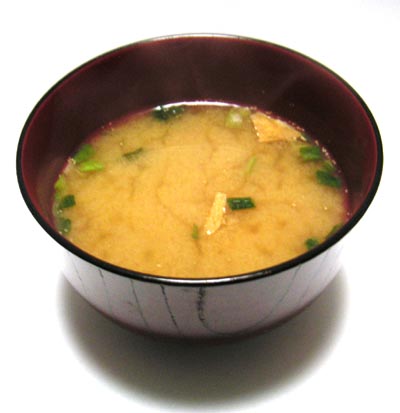
Miso soup
 There are other comfort foods on my list. Miso soup, which has been wonderful at soothing my stomach during this pregnancy. Sushi, which I associate with J. and some of our earliest dates (he puts sushi on his comfort food list, too). Cafe au lait, though I'm not sure where that one came from. Ginger cookies, associated with my dad, although my mom makes them, too. Funny how a lot of these are more savoury or bitter, rather than sweet.

Another comfort food, best in the winter, is biscuits and gravy. That definitely falls onto the more unhealthy side of the comfort food spectrum. This was a meal that my family never had at home, but the retreat centre that we went to every year and that I later worked at would do biscuits and gravy as one of their breakfasts. Actually, when I worked there and was on breakfast duty, that was one of the meals I helped make. So once in a long while, we get some sausage, make the gravy, and bake biscuits. I haven't done that in ages (probably a year or two), and it sounds rather good right now, but it's probably best made after the baby's out, so I don't have to try to figure out the carb content of the gravy plus the biscuits.

However, a biscuit-centred comfort food that I am going to make, today, is tomato soup with biscuits. I'll toss in some whole-wheat flour to up the fibre content of the biscuits, and skip doing the tomato soup with milk like I usually do (we're almost out, anyway, and my back doesn't want me to lug home a four-litre right now). This was a family dinner when I was a kid, and it's special to me because biscuits were one of the first things I learned to bake on my own. After that, whenever we had tomato soup for dinner, I'd make the biscuits. I had the recipe memorized for a while, though I don't right now. I'm doing buttermilk biscuits this time because I'm also making chocolate buttermilk muffins to freeze so we'll have them after the baby's born. We don't have a deep-freeze, so I can't pre-make a bunch of things, but we do have room for a batch or two of muffins. They aren't exactly comfort food, but they are convenient and hopefully tasty (new recipe).

Anyone have some interesting comfort foods, or ones with great backstories?

06 June 2013

book musings: Japanese Women Don't Get Old or Fat by Naomi Moriyama

Following from the theme of my last post, this one is also about food. Or at least, it's about a book on food. I ran across this book at the library a while ago, and hadn't felt like picking it up, though the title amused me. The other day, though, I went to the library and browsed through the cookbook section, looking for recipes with fewer carbs, since that's something I now have to limit more. I was disappointed with most of the books on the topic, to be honest, since they were mostly about losing weight, rather than a diet for a pregnant woman with gestational diabetes. I'm not supposed to be losing weight while the baby's in the middle of her third trimester growth spurt. I'm sure there's at least one book on the topic, but it was not on the shelf in front of me. I picked up one book and returned it a few days later, not impressed

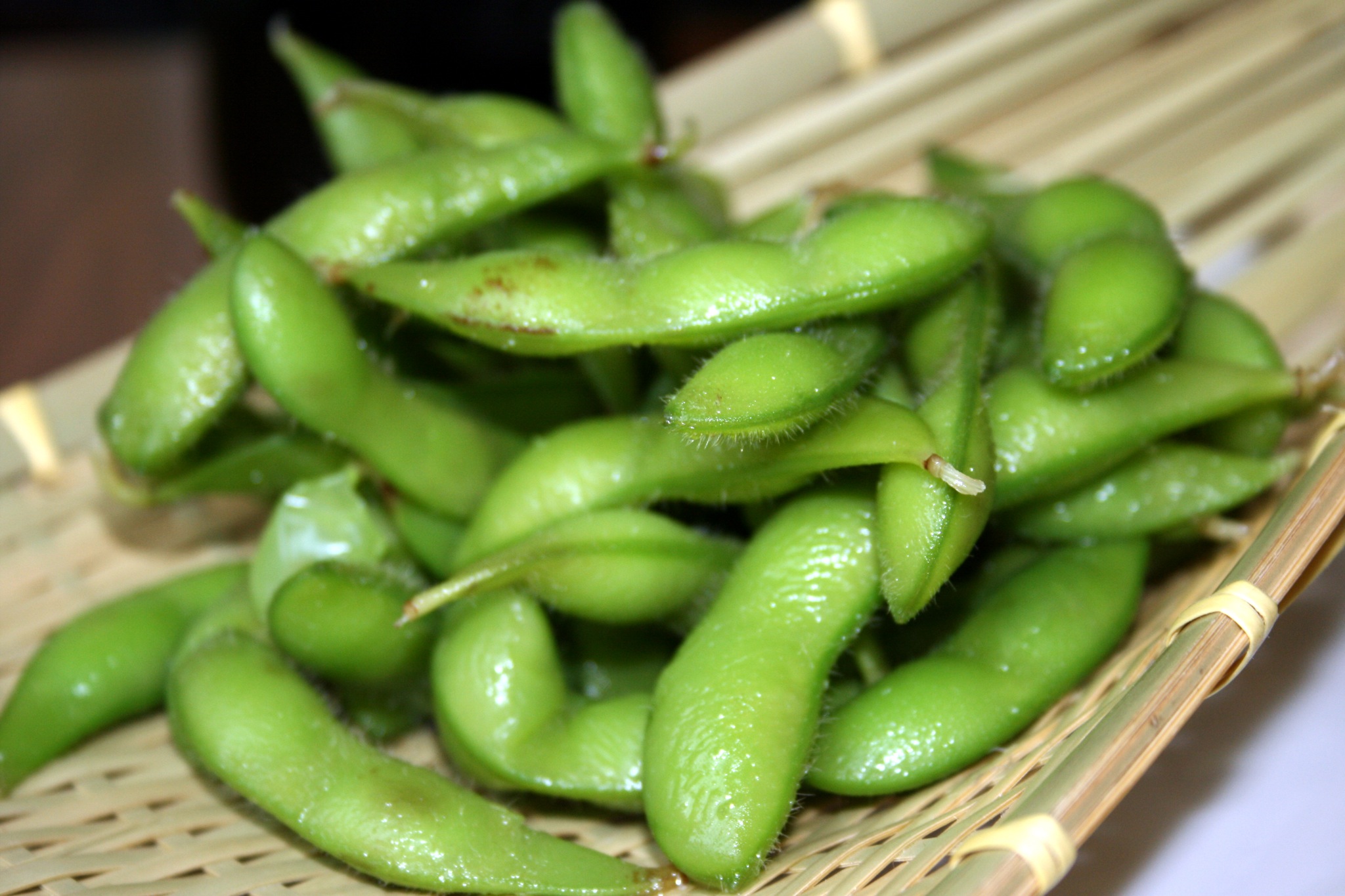
From http://upload.wikimedia.org/wikipedia/commons/e/e7/Edamame_by_Zesmerelda_in_Chicago.jpg
Then I spotted this book I'd noticed on a previous trip. It's about Japanese home cooking, and is titled Japanese Women Don't Get Old or Fat: Secrets of My Mother's Tokyo Kitchen. The author, Naomi Moriyama, lives in New York but was raised in Japan and frequently visits her family in Tokyo. The book is co-written with her husband. The title made me smile, because it reminded me, of course, of Mireille Guiliano's book, French Women Don't Get Fat, which annoyed me because the writing style felt more than a little patronizing. Moriyama's book, on the other hand, didn't provoke that response in me. Her genuine enthusiasm for the topic, for her culture, and for food is very apparent. She's as quick to point out the problems in the typical Japanese diet as she is to highlight the health benefits. The major problems she mentions are too much sodium and too much white rice, both easily solved problems with the replacement of low-sodium options and brown rice. There is also typically less dairy in the Japanese diet than in the Canadian diet (though since I don't remember what other things have significant amounts of calcium, this lack may be compensated for in other ways).

However, the emphasis on fresh lightly cooked vegetables, fruit, fish, smaller portions, and not eating to the point of complete satiety are very good things. There's also a heavy emphasis on green tea, although she is careful to stress that tea's beneficial properties have only been researched to a small extent, and all that we can really say is that it has lots of antioxidants in it, and it's a nice calorie-free option (since my dietician has told me that she'd prefer me to eat, rather than drink, my calories, I've been more inclined to eat fruit rather than drink fruit juice and have been drinking lots of water and decaf tea).

One of the other foods highlighted in this book is soy. Moriyama cites the studies on this food, but clarifies that the "soy is good for you" studies and the "soy is bad for you" studies aren't yet extensive enough to provide very concrete information, but soy beans in their less processed forms are probably better for you than a soy protein shake (not surprising). We like tofu since I figured out what to do with it a few years ago (my first attempt at cooking tofu was not a success), and edamame is easy to find in the frozen vegetables section. Actually, it's one of the few frozen vegetables I've bought, since I've never been keen on the combo packs of frozen veggies and I don't like corn. Usually we get frozen peas or green beans, which then get used in stir fries or curries.

So I've been giving edamame a try as a snack in the afternoon. It's a good choice so far. I realized a couple days ago, based on some of the things I have to test, that I wasn't eating quite enough, so I've been trying to bump up my caloric intake without going too far on the carb front. It's harder than I thought, because what I want to eat are more carbs, and if I don't want my blood sugar to spike, that's not an option.

Anyway, the book's a fun read, and there are some great recipes. I can't try all of them right now, and I must admit the book made me long for sushi, which I can't have until after the baby's born, but the principles in it are rather useful for thinking about a long-term healthy diet. 

30 May 2013

more changes

Brown rice, picture from http://www.tylermcpeak.com/wp-content/uploads/Brown_rice.jpg
The last few weeks have been more than a little fraught, but things are settling again. Earlier this month, I went in for the blood sugar testing that is recommended for pregnant women. You fast for at least 8 hours prior to the test, then they take a blood sample, make you drink a weirdly sweet fizzy orange drink, and  test your blood at one and two hours afterward. I woke up nauseous on the day and threw up the water I was allowed to drink on the way there, and felt nauseous through most of the test. Then I went home, figuring that I'd be fine. Several days later, I headed back to the hospital for my regular prenatal appointment, where my least favourite doctor at the practice informed me that I had gestational diabetes. Then she measured the height of my uterus and proceeded to inform me that the baby was too small and lectured me for not eating enough protein. Because my numbers were borderline (as in, my fasting number was just on the line) and because she was concerned about the baby's size, she told me she wouldn't send me to the dietician, but I needed to increase my protein intake.

I went home and cried the rest of the day. I cried at the drop of a hat off and on for the next few days, one of which was, unfortunately, Mother's Day. I nearly lost it at church and was about ready to punch the next person who told me "Happy Mother's Day." I'm not fond of greeting card holidays to begin with, and it's a holiday my mother especially has always played down, because she doesn't want it to be a source of guilt for her kids like it often was for her. So I've inherited a dislike of the day. I managed to get myself moderately composed by the end of the service, and then we went to see Star Trek, which helped a lot.

Then the doctor's office called again. Someone else had looked at my chart and decided I needed to see the dietician after all. I hung up and cried some more, furious that my body couldn't make a baby without reacting weirdly to food. Then I called them back and tried to find out why one doctor had told me one thing and the other had told me something else. The poor receptionist told me to call the dietician and talk with them, since she couldn't do anything. So I did. The dietician's receptionist was actually helpful. She suggested that I come to the appointment, that it would be helpful, and it seemed like she was actually interested in listening to me. So, off I went to the appointment.

Gestational diabetes is usually a temporary condition, where, for some reason or another, the body during pregnany either does not make enough insulin or does not process insulin normally. It can happen for a number of reasons--hormone levels, position of the baby (for example, if it's squishing too much against the pancreas), or probably a few other reasons I don't know about. The information sheet I was given said something like 3-15% of pregnant women develop it, which sounds like a crazy statistic. There are predisposing factors, such as ethnic background, weight, and a family history of diabetes. I'm a tad overweight and my mother had borderline gestational diabetes when she was pregnant with me, although not with my brothers, so it's likely that those, combined with my body's reaction to all the hormones (like with the morning sickness) were what tipped the balance. One of the biggest concerns with the condition is that, exposed to unchecked blood sugar levels in the mother, the baby may grow much larger than it would have without that exposure. This can, of course, lead to complications during delivery, and after birth, the baby can develop jaundice from the sudden drop in its blood sugar levels after being separated from the placenta. The mother may develop high blood pressure in late pregnancy and is now at increased risk of developing Type 2 diabetes later in life. Gestational diabetes usually goes away within the first few weeks after giving birth, once hormone levels return to normal. It's typically controlled with diet and exercise, and only severe cases require the administration of insulin.

When I came out, I had learned that I need to lower my carbohydrate intake for the moment and that I was now required to test my blood sugar three times a day. This was upsetting, too. I love carbs and I've avoided dieting on purpose for most of my life, because I didn't need to add to my body image issues. I'm unused to checking calorie and carbohydrate contents and have very little real idea of the caloric content of most foods. Additionally, after spending most of my pregnany puking my guts out, any food that stayed down was good. I'd thrown up several days in a row prior to my appointment with the dietician, and had been sick right before the appointment, which didn't help my state of mind.

Two days later, at my next prenatal appointment, I found out that I'd lost weight again, probably due to lowering my sugar intake and the morning sickness. Fortunately, the doctor who was in that day was not the one I'd had the time before. His attitude was that the gestational diabetes was an annoyance for me, but as long as I was careful about what I ate and made sure to exercise, I'd be fine. I mentioned the baby's size, and he checked again and told me that the baby's heart rate was fine, and that as I'm a small person, a large baby wouldn't be a good thing. He wasn't concerned. I got my Rhogam shot at this appointment, so now the concern about my blood-type going crazy on the baby isn't a problem (this is a whole different issue. I'm O-negative, which means I lack Rh-factors in my blood.  Most of the world's population has a positive blood type, so odds are that J. has contributed a positive blood type to the baby, and that she's also positive. If her blood crosses the placental barrier, my body could form antibodies to the Rh-factors in her blood. The nice thing about this is that there's a simple treatment for it that prevents my body from forming antibodies. At six months, the mother gets a shot for the problem, and then the baby's tested right after it's born. If its blood type is also negative, there's no worries. If it's positive, the baby gets a shot, the mother gets another shot, and then they're good. This is one reason for the early blood tests in pregnancy--this is an issue that needs to be identified early so it won't cause problems later).

After a week of monitoring my blood sugar levels, I was back at the dietician's. My levels are good, and I'm allowed to eat more than I thought I was, but I really need to avoid white flour most of the time, since that spikes blood sugar way more than most things. So it's whole grains for us, which I've already been doing more of because of the increased need for fibre in my diet (yay pregnancy). But for the most part, it's looking good. I don't have to jab myself in the finger quite as many times in a day now, and that's also reassuring. I'm getting used to it, but I'm not a medical professional, and never intend to be one.

I'm still wondering how pregnancy as a whole is going to redefine my relationship with food. I've never had an eating disorder, but I have struggled with eating enough vs. eating too much, eating more healthily, and body image. For the first half of my pregnancy, it was all about keeping food down, and to an extent, that's still a concern. It's not entirely normal to weigh less at the beginning of the third trimester than I did when I got pregnant. Now it's not only about eating enough, it's about eating enough while keeping my blood sugar levels from going too high. Of course, my immediate craving is for the starchy foods that are the kind of thing I have to eat in much more moderation. As I write this, I really, really want Chinese food and I'd have to have fairly small portions of most of what I'm wanting (although smaller portions are probably a very good idea).

When I was at my worst points while reacting to this, I felt so tired of pregnancy being about what I could and could not eat. I'm still tired of that. And after the baby's born, after my body's handling insulin normally again, I'm looking forward to being able to have a few more carbohydrates and not having to worry quite as much about white flour. At the same time, I hope that some of the changes will be permanent, that I will grow more thoughtful about what I'm eating. I think that would be good for our family as a whole. Although I am planning to have sashimi with white rice sometime after the baby's born. White short-grain rice is on the list of "worse for the blood sugar" so I have to avoid it for now. Long-grain and/or brown rice it is. Two and a half months to go.

15 January 2013

rambling about food

Years ago, I read Marya Hornbacher's memoir, Wasted, about her experiences with anorexia and bulimia. It's the sort of book that makes you really want to avoid developing an eating disorder. She's a very good writer, and I'd recommend her work simply because of that, but I'd also recommend it because it's an important story to read. Sometimes, having read her story was one of the things that kept me from going off the deep end when I was in the darker parts of my depression.

Depression isn't as much of a problem right now as it has been in the past. I've gotten off my medication because I'm pregnant, and the anticipated problems with stopping the medication didn't happen, which was a really great thing. But I've been remembering Wasted recently, because morning sickness has been enough to put me off vomiting for life. I finally caved yesterday and got the prescription for an anti-nausea drug filled. It doesn't help completely, but at least I'm no longer throwing up everything I eat or drink. Just some of it. That's a lot better than what was happening yesterday, when I couldn't even keep water down. I keep telling myself this has to be worth it, but at this point, I think childbirth sounds better than pregnancy. At least labour doesn't last nine months. Unless pregnancy suddenly changes, I'm probably not going to be one of those women who wax lyrical about how wonderful and magical pregnancy is. If someone tries to tell me that right now, I'll probably feel like punching them (although I would refrain, since this is Canada).

This was supposed to be going somewhere. Oh, yes. One thing Hornbacher mentions is the way being deprived of food makes you obsess about it. My being sick is about the cocktail of hormones bouncing around my system, rather than the complex reasons that might drive me to an eating disorder, but I have not been exempt to thinking about food. I'll be lying in bed, falling asleep, and suddenly think, despite the nausea, "I want a doughnut!" Or I spend a while looking at recipes on Pinterest. Or wishing I felt well enough to bake the chocolate chip cookies I want to eat, but know won't go over so well.

There are things I plan to make once my stomach settles. I want to learn how to make pho, and there're a couple desserts I've been longing to try. I even found a recipe for Beef Kimbap, which is one of the Korean versions of sushi (or sushi is the Japanese version of kimbap--people aren't really sure). And it is sushi I'm allowed to eat--everything in it is cooked. That's one of the things I miss most, really. I like alcohol, but it's easier to cut that out. Alcohol's expensive and it tended to interact with my anti-depressants to make me even more prone to drowsiness and sleep disturbance, so I didn't have it often before I was pregnant. But it's hard to say goodbye to sushi until after the baby's born, because I feel that fish tastes best when it is raw. And there are at least half-a-dozen good sushi places within an easy walking distance of our home (i.e., several blocks). More sushi places than Starbucks, and there are a lot of Starbucks around here. After we went to go see The Hobbit on Saturday, we went for sushi, because I hadn't eaten in hours (that's a long movie, and I'd been sick beforehand). I got teriyaki, and J. got sushi. I did eat a couple of his California rolls--those are okay--but I've been craving sashimi, and my plan is, once I'm able to manage a dinner out after the baby's born (or failing that, we'll do take-out), I'll get a chirashi-don from our favourite sushi place. Nothing but rice topped with lots of fish.

In the meantime, in the absence of some of my favourite foods, I'm making blueberry muffins. I'm using this recipe, which looks fantastic, so now I need to go to the store for buttermilk.

12 December 2012

Redeeming the Fruitcake

My family didn't really do fruitcake when I was a child. I'm not sure if this is because my mother didn't feel like baking it and didn't see the point in buying it, or because she felt there were plenty of sweet things around at the holidays, and she didn't need to add to the sugar overload. I know that my grandparents like fruitcake, but I don't recall it ever being out on the dessert table at family Christmas (and believe me, their dessert table was impressive). The only time I've ever had fruitcake at their house was when we were there several weeks after I made my very first fruitcake, and was telling them about it.

I'd heard the jokes about fruitcake, but since I hadn't really encountered it (except for the fruitcake used as a prop in a series of sketches my drama class did for Christmas in grade 7), I didn't really have an aversion to it. Nor did I have a preference for it. I liked candied cherries, but raisins were only good cooked, in my opinion, and I've never been overly fond of nuts. Then off I went to university, and suddenly encountered the cornucopia of fruitcakes at Christmas-time in the grocery store.

I hadn't noticed this before, despite going grocery shopping with my mum quite frequently, so I am inclined to ascribe it to the American/Canadian difference. Americans don't seem to embrace fruitcake quite as passionately as Canadians do. Feel free to correct me if I'm wrong. I may have just been frequenting the wrong grocery stores before I emigrated, and been surrounded by non-fruitcake-eating people.

To go back to the grocery store, I was curious. So I bought a fruitcake from Save-On and brought it back to my dorm and nibbled on it for months. It was rather intense, and there were too many nuts, and the icing on top was absurd. But I liked the fruit part.

The fruit was really the only part I did like. A store-bought fruitcake is really mostly fruit and nuts, held together by the tiniest amount of cake batter. It falls apart into a sticky heap if you look at it cross-eyed, and it tastes of too many bizarre preservatives, since they can't sell extremely alcoholic fruitcakes in a grocery store. And sadly, the liquor store just sells liquor, not cake.

After J. and I got married between third and fourth year university (yes, we're crazy, but it's worked out well so far), I embarked on fruitcake-making that Christmas (I would have tried it earlier, but I'd lived on campus before that, and our university had a no-alcohol-on-campus policy. Well, technically, at that time, they had a no alcohol, period policy, which has since been relaxed. My paranoia about getting caught with a giant bottle of brandy in my hand as I made cake kept me from making fruitcake while still living there). My first fruitcake was okay, but I've since played around with my favourite recipe (I don't remember where it came from at this point; my copy has no citations) and come up with a variation that I, at least, like much better. J. likes it, too, but he'll eat almost anything if it's made of cake.

My recipe eliminates the nuts and chopped citron. I tried the citron, and I just didn't like the flavour it gave the cake. Out it went. I increased the amount of candied cherries in proportion. I switched in brandy for the sherry, and added more of it, and starting pouring it on the cake to help the aging process. I skipped the suggested garnishes (if I didn't like the citron in the cake, I didn't think I was going to like marmalade on top. Plus, it would make the cake needlessly sticky. Have I mentioned before that stickiness truly bothers me? Heaven knows how I'll cope with children).

The cake ends up moist, a little chewy, a little crumbly, and rather alcoholic. It's a dark fruitcake, because light fruitcakes seem like a waste of time. Well, not really. I just prefer the dark fruitcake, the way I prefer dark beer. A slice of it goes very well with hot black tea with milk in. It's quite rich, and I'm sure it's calorie-laden, so you'll probably start to feel full after a single slice.

December 2012's Fruitcake


Fruit Cake


1/2 cup currants


generous 1 cup raisins


1/2 cup sultanas (or golden raisins, if you can't find sultanas)


1/2 cup (or a little more) glacé cherries


1/2 cup brandy, divided


3/4 cup butter, at room temperature


scant 1 cup dark brown sugar


2 size 1 eggs, at room temperature


1 3/4 cups plain flour


2 tsp. baking powder


2 tsp. each ground ginger, allspice, and cinnamon


1 tbsp. milk
1 tbsp. golden syrup (This is not corn syrup or molasses, for those unfamiliar with golden syrup. It's a sugar syrup that's a by-product of the sugar refining process and has a distinct caramel-like aftertaste. The darker kinds are usually just called treacle, but you want the golden kind here)


At least a day in advance, combine the dried fruit and cherries in a bowl. You may change the balance of dried fruit if desired, so long as it all adds up to about 2 cups (dried cherries do well in this, as do golden raisins rather than sultanas). Stir in 1/4 cup of the brandy, cover and soak overnight. Feel free to let soak for a couple of days, adding more brandy if desired.


Preheat the oven to 150°C/300°F. Line and grease a 9x3 inch springform tin with greaseproof paper. If you don’t have a springform pan, grease and flour a 9 inch cake tin. Place a tray of hot water on the bottom of the oven.


Cream the butter and sugar. Beat in the eggs, 1 at a time. Sift the flour, baking powder and spices together three times. Fold into the butter mixture in three batches. Fold in the syrup, milk, dried fruit, and liquid, adding the second 1/4 cup brandy.


Spoon into the tin, spreading out so there is a slight depression in the centre. Bake for about 2 1/2—3 hours. When the top is golden, pour a capful or two of brandy over the cake, then cover with foil to prevent over-browning.


Cool in the tin on a rack for about 10 minutes. Pour another capful or two of brandy over the cake while it cools. Turn it out onto the rack to finish cooling, and pour more brandy over the bottom of the cake.


When it is cool, wrap it in parchment paper and store either in a sealed container or a sealed ziplock bag. Sprinkle with brandy every once in a while, to help the aging process. You may eat it right away, of course, but it will be better if it has aged for a week or three.

02 June 2012

Gluten-free: Days 6 & 7

So we come to the end of the week, the end of the experiment. Based on what I've learned over the last few days, I'm not gluten-intolerant. So I can eat gluten-infested foods without worrying too much.

This is, in my opinion, a pretty good thing. I know that many gluten-free people (in my experience) are quite evangelistic about it, and think that everyone should stop eating gluten, but for me, at least, the reality is that I'd rather just eat fewer starchy things and be more healthy about my eating habits in general, rather than having to worry about completely cutting out something that's all over the place.

So yeah. Not the most exciting trial of an elimination diet. I might chronicle the week I cut out dairy and see what happens with that, but we'll have to see. Or I'll just update on the general craziness that is Unofficial Knitting Month and planning for Yarn Harvest in the fall, and trying to get my blasted thesis done.

30 May 2012

Gluten-free: Day 3

baking with multiple flours...

Well, gluten-free pizza isn't so bad. I used a recipe based on the one Gluten-Free Girl has up on her blog, swapping out the potato starch for tapioca flour, because that's what I had on hand. It wasn't bad, but I definitely missed how wheat flour makes a great, easily rollable dough. I might need to experiment with the amount of ground flaxseed in the mix if I keep doing this. I did like the corn flour and the way it tasted with the pizza, so that was a good choice, but I think the balance of cornstarch in the mix was a little too high. I'll have to experiment.

I really thought I'd be experiencing more gluten cravings. I want bready food, but not so urgently that it feels like withdrawal or something along those lines. And I'm not noticing a difference with my allergies yet. We'll see how it goes tomorrow, when I spend the afternoon manning a table at the Farmer's Market. There are some quite spectacular bakers there usually, so there will be temptation in the way.

28 May 2012

Gluten-free: Day 2

Day 2 of Gluten-free, or curses on the peanut butter companies...

I probably didn't balance my diet too well today, as I had only a banana for breakfast. My goal tomorrow is kasha, since I can't have the cream of wheat this week, and I'm not too sure about the provenance of the oats. I was craving peanut butter with celery around lunch-time, and after getting home from errands bringing celery with me, I discovered that the peanut butter someone gave us a while ago has maltodextrin in it, which means there's probably gluten in there. So, even though we still have a jar and a half of peanut butter to go through (and one of those jars is huge), if I want peanut butter this week, I'll have to buy a jar of the kind we usually eat--the kind with peanuts and maybe some salt and nothing else.

I did a basic stir-fry with rice for dinner, and that was fine, although I couldn't use up any random sauces from the fridge because they all had, wait for it, gluten. However, at knit-night, I managed to avoid the temptation to buy baked goods at Starbucks because of the gluten and that was definitely a good move. 

I'm feeling kind of hungry right now, but I figure a cup of tea and maybe an apple will quell that urge for the moment, since dinner was about five hours ago (which would be why I'm hungry). So far, the bread craving is surprisingly minimal. We'll see how it is tomorrow, when I attempt gluten-free pizza crust.

27 May 2012

Gluten-free: Day 1

Recently, discussion with my SIL and a friend who are both gluten-intolerant has finally convinced me to try giving gluten-free a go, to see if gluten happens to be the source of my year-round congestion. I'd really rather it be dust-mites, but if it's gluten, I'm going to find out. Today kicks off a week (at minimum) of gluten-free living, to see if my symptoms are aleviated. This is about a week and a half after my husband and I started lowering our carb intake (i.e., buying less cereal) and switching to focusing on fruits, vegetables, and protein (and yes, I'm well aware that there are carbs in vegetables and fruits, but we're trying to eat less of the starch-laden carbs). The husband's already lost 4 kilos, whereas I can't tell the difference, except I'm less inclined to snack than usual.

Day 1: Braving the church potluck

I picked a hell of a day to go gluten-free: there was a potluck at church. The few people at my church who can't have wheat usually bring their own food on potluck days, and most of the food there is made without thought to food sensitivities or allergies. So I ended up with a plate full of salad. At least I was reasonably sure the potato salad was safe.

I'm not noticing the difference yet, but it's been less than twenty-four hours. I am noticing a distinct craving for bread, but so far, I'm not exactly jonesing for a bagel. I'm more in the mood, oddly enough, for steak. That or peanut butter with celery. And I think we're out of celery so I'm settling for grapes, since it's a little early for dinner.

Gluten-free so far? Meh. I kind of wish I could have had one of the chocolate croissants at church, but it's not exactly something I need in my diet, now, is it?